|
·
Description: This piece was commissioned
by German cellist Benedict Klöckner as a companion piece for Bach’s Cello
Suites. The composer was particularly inspired by maestro Klöckner’s
performance of the Gigue in Bach’s Cello Suite #6, and even incorporates some
quotes from that piece in his composition. In his attempt to include other
elements that referenced maestro Klöckner’s homeland in Rhineland-Palatinate,
he was inspired by the evocative landscapes and medieval castles of the
region.
·
Premiere: Benedict Klöckner
premiered this piece on July 5th, 2020 at Schloss Burg Namedy
in Andernach, Germany.
|
|
Program Notes by José Elizondo:
In 2020, Benedict Klöckner commissioned José
Elizondo to write a cello solo piece for his new album. The project paired
each of Bach’s Cello Suites with a piece by a contemporary composer. Jose
wrote “Under the starry sky of the Rhine" inspired by Mr. Klöckner’s
performance of the Gigue in Cello Suite #6, including multiple quotes from
the Gigue in his composition. The piece was premiered literally under the
starry sky of the Rhine, at a beautiful outdoor concert in the gardens of a
palace by the river Rhine. It has been performed in many concerts by Mr.
Klöckner, including at the Alte Oper Frankfurt and the Berlin Philharmonie, and it has been featured in several
international festivals. This piece served as a starting point for what
eventually became the first movement of the cello concerto "The Legend
of the Noble Knight". In addition to the references to Bach's suite #6,
Elizondo included multiple elements that referenced Mr. Klöckner’s homeland
in Rhineland-Palatinate, such as the evocative landscapes and medieval
castles of the region, as well as the legends associated with them.
An additional source of inspiration for this piece
was the painting "Wanderer above the Sea of Fog" by German artist
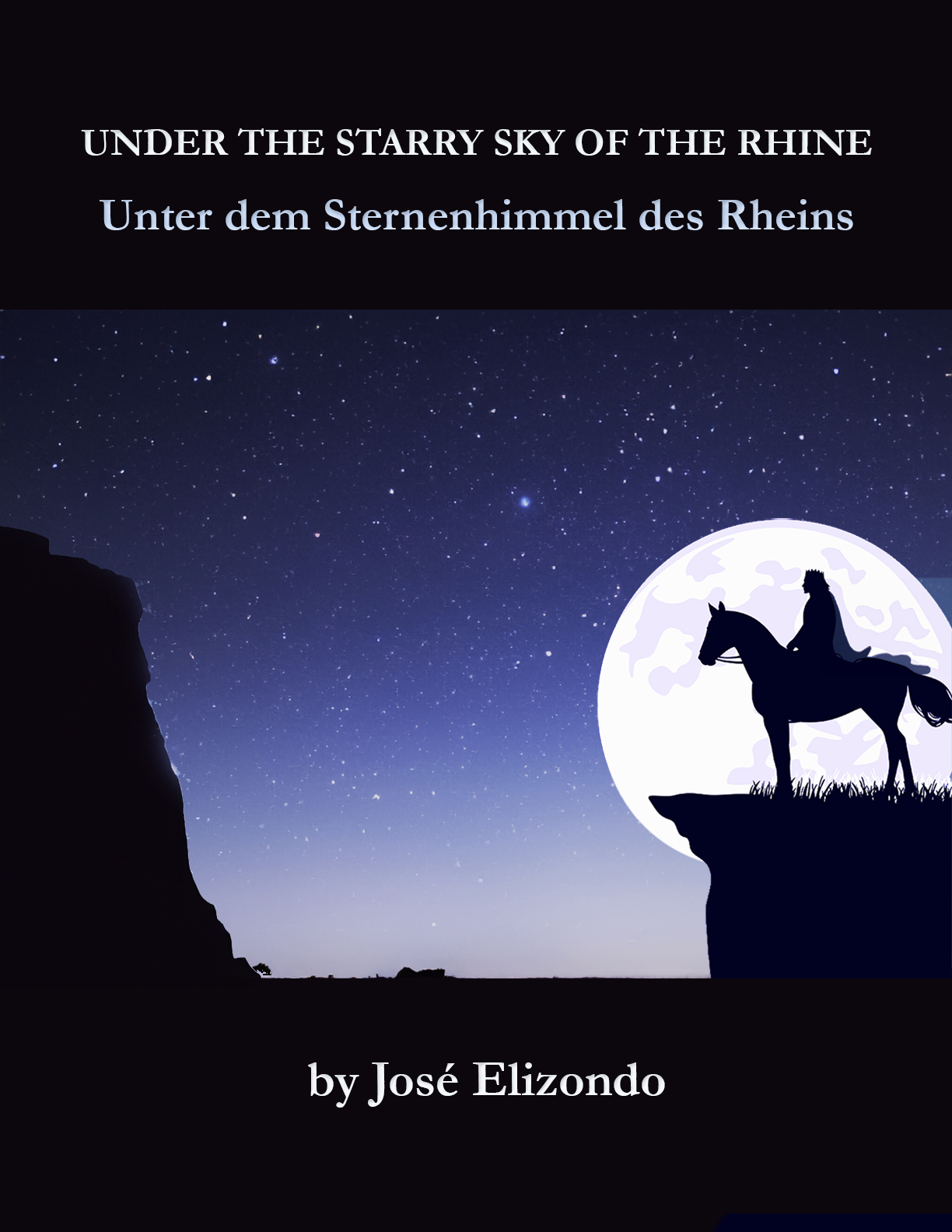
Caspar David Friedrich. At the opening of the piece, the composer imagines
the mood of Friedrich's painting, except in his vision, the protagonist is a
medieval Knight, intrepidly standing upon a rock at the edge of the Rhine, in
awe of the might of nature. As the movement develops, we hear music evocative
of the Knight, who at times is riding his horse on the banks of the river
Rhine, and at other times stops to admire the beauty of the starry sky and to
meditate upon his life.
The "Knight's motive", derived from a
musical interpretation of the names of Bach and Benedict merged with a motive
from Bach's Gigue, is presented in various forms that undergo geometrical
transformations. These motivic variations highlight different aspects of the
character of the Knight: courage, kindness, heroism, modesty, selflessness,
nobility. The shape of some other melodies played by the cello are based on
the shape of natural landmarks in the Koblenz region of the Rhine.
|